
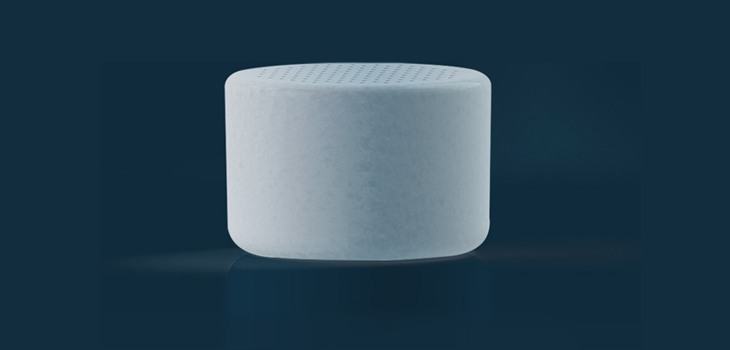
Participating physicians implanted Agili-C by way of a mini-arthrotomy.
The study’s end date is this coming December 2018 and we would expect to see data in early 2019.
The study’s primary outcome measure is a change in baseline KOOS [Knee Injury and Osteoarthritis Outcome Score] pain subscales after 24 months. The study also had the following secondary outcome measures:
- Change from baseline to 3, 6, 9, 12, 18 and 24 month visits as measured by the KOOS total score and subscales.
- Change from baseline to 18 and 24 month visits in IKDC [International Knee Documentation Committee] current health assessment.
- Change from baseline to 3, 6, 12, 18 and 24 month visits in Lysholm with Tegner knee score.
- Change from baseline to 3, 6, 12, 18 and 24 month visits in IKDC knee examination form 2000.
- Change from baseline to 3, 6, 12, 18 and 24 month visits in IKDC subjective knee evaluation.
- Change in MOCART [magnetic resonance observation of cartilage repair tissue] scoring as measured at 3, 6, 12, 18 and 24 month visits.
The study also tracked complications and adverse events, whether device-related or not.
Another study, with broader indication, already enrolled over 140 suffering from a wide range of cartilage lesions and osteoarthritis (OA).
Moreover, the company completed enrollment of a 20-patients study with OA of the great toe.
IDE Study
The Pivotal IDE [investigational device exemption] study, which commenced this September 2017 will enroll a minimum of 250 patients in a prospective, multi-center open-labeled randomized controlled study of Agili-C versus surgical standard of care for treating wide range of lesions of the knee joint.
The study is not expected to end before January 1, 2022 although, as of this past October, investigators had already enrolled 32 patients at 6 European centers.
The trial’s objective is to demonstrate superiority of the Agili-C implant over microfracture and debridement for treating pain due to cartilage or osteochondral defects in both osteoarthritic knees and knees without degenerative changes.
CartiHeal’s Altschuler says: “This study was designed to include patients with a broad range of cartilage lesions, as orthopedic surgeons often see in their clinics.”
“Agili-C has been implanted in over 300 patients to date.”
Recently a few physicians tested Agili-C in other diseased joints. Eventually the company hopes to treat ankles, big toes and other cases of moderate joint osteoarthritis.
