
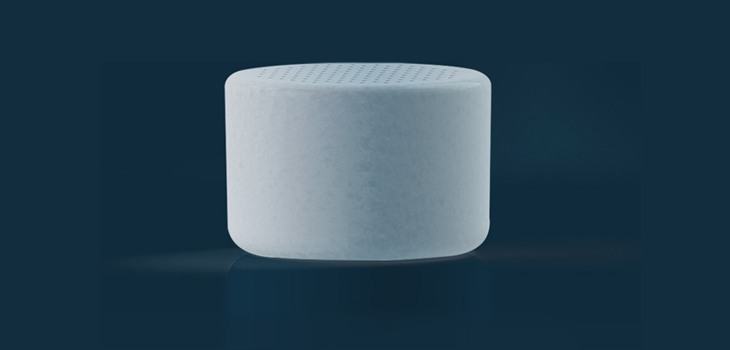
While the general public is not aware of CartiHeal, Inc.’s technology, a string of top venture capital and corporate investors (Johnson & Johnson, Bioventus, Elron, Accelmed, Access Medical Ventures, aMoon and Peregrine Ventures) have seen the data.
Their reaction was to open their check books to the tune of about $55 million.
We decided to follow the money.
Here’s what we learned.
An Israeli Spin-Off
Five years ago, a spin off from the Department of Biotechnology Engineering at Ben-Gurion University announced that it had raised $10 million to convert a lab discovery into an acellular, single step and off-the-shelf technology that regenerates damaged cartilage and its underlying subchondral bone.
The implant, which was named Agili-C, had demonstrated, in both animal and human studies, an ability to regenerate true hyaline cartilage—confirmed by the presence of Type II collagen and proteoglycans, and the absence of Type I collagen—without relying on growth factors, stem cells or cell expansion techniques.
An independent research laboratory, NAMSA (North American Science Associates, Inc.), confirmed the claims made by these Ben-Gurion University scientists.
CartiHeal’s lead scientist, Founder and CEO Nir Altschuler said at the time: “Biopsies and MRIs show the regeneration of hyaline cartilage as early as 6-12 months following implantation. This is nothing short of a technological breakthrough.”
Coral-Based Technology
Corals, which are living marine organisms of the class Anthozoa of phylum Cnidaria, secrete exoskeleton, which is composed of calcium carbonate. That CaCo3 is in the crystalline form of aragonite (or calcite) and is the basic building material for coral’s massive underwater colonies and structures.
It is also a basic building block of human bone.
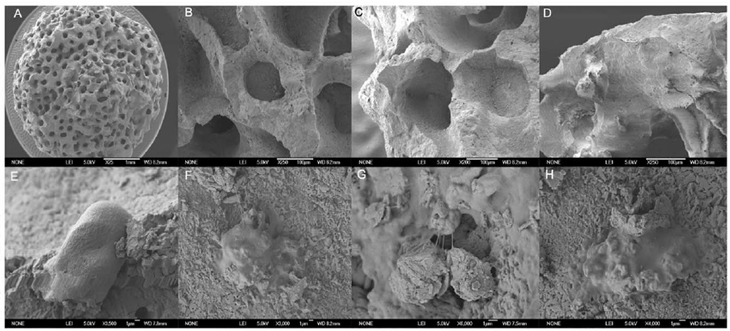
Because of the way that coral is built, it has a natural three-dimensional (3D) porous structure.
To understand how unique a coral scaffold is, here are eight scanning electron microscopy images.
CartiHeal developed a process that modifies the aragonite structure, improves it in such a way that it can induce repair cells (for example mesenchymal stem cells), blood vessels and other elements necessary to regenerate hyaline cartilage.
