
Overview:
Medcura’s new spinal surgery advisory board includes 9 spine surgeons who are experts in clinical trial strategy.

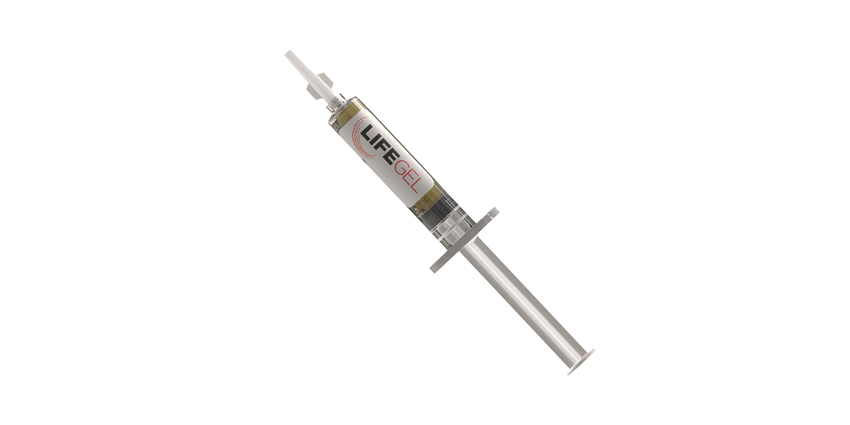
Medcura, Inc., a medical device company developing versatile hemostatic products, has established an advisory board of top spine surgeons to consult as its absorbable hemostatic gel LifeGel™ goes through clinical trials, regulatory review, and, potentially, commercialization.
The new spinal surgery advisory board includes nine spine surgeons who are experts in clinical trial strategy and medical device design.
All the company’s products deploy a patented biopolymer technologies to control surgical bleeding. The hydrophobically modified biomaterials achieve hemostasis by coating the bleeding site.
This latest product has shown in preclinical studies so far that it can reduce the risk of swelling, which is an important risk factor in similar products on the market.
Chief Medical Officer Kenneth Renkens, M.D., told Orthopedics This Week, “Basically, we formed the advisory board so surgeons in leadership could give us advice on how to successfully navigate bringing LifeGel to market.”
An internationally renowned neurosurgeon and co-founder of the Indiana Group, he is serving as chair of the board.
Renkens on his own has 30 years of experience in the implantable surgical innovation space and has participated in five investigational hemostasis spine studies. As Chief Medical Officer at Medcura, he leads the clinical innovation of surgical hemostatic agents for the company.
Who’s Who in Spine
Medcura’s Spinal Surgery Advisory Board includes the following internationally recognized experts who are leaders in the field:
- Adedayo Ashana, M.D., Minimally Invasive Spine Specialist at OrthoNC in Raleigh, North Carolina
- Barrett Boody, M.D., Orthopedic Spine Surgeon at Indiana Spine Group, core faculty for Indiana Spine Group’s spine surgical fellowship, and Assistant Professor of Clinical Orthopedic Surgery at Indiana University Health
- Bryan Cunningham, Ph.D., Director, Scientific Orthopaedic Research at Department of Orthopaedic Surgery, MedStar Union Memorial Hospital and Professor, Department of Orthopaedic Surgery, Georgetown University School of Medicine
- Peter Grossi, M.D., Chief Physician Executive, Duke Health Integrated Practice, Community Division Chief of Neurosurgery, Duke Raleigh Hospital
- Serena Hu, M.D., Professor and Vice Chair of the Department of Orthopaedic Surgery and Chief of the Division of Spine Surgery at Stanford University School of Medicine
- Jun S. Kim, M.D., Assistant Professor of Orthopedics at Icahn School of Medicine at Mount Sinai and Head of the Orthopedic Surgery Department’s Artificial Intelligence and Machine Learning laboratory
- Paul McAfee, M.D., MBA, Chief of Spinal Research at Union Memorial Hospital and Professor of Orthopaedic Surgery at Georgetown University School of Medicine
- Kornelis Poelstra, M.D., Ph.D., Spine Surgeon at Allegiant Spine Institute, Director of the Robotic Spine Institute of Las Vegas, and Chairman of Orthopaedics and Spine at Southern Hills Hospital, Las Vegas, Nevada
- Nicholas Theodore, M.D., Professor of Neurological Surgery and Director, Neurosurgical Spine Center at Johns Hopkins Medicine and Chairman, Head, Neck & Spine Committee, National Football League
- Alexander Vaccaro, M.D., Ph.D., MBA, Chairman of the Department of Orthopaedic Surgery, Thomas Jefferson University Hospital and President of Rothman Orthopaedic Institute in Philadelphia
A Promising Alternative
LifeGel is the first and only surgical hemostatic agent to receive U.S. Food and Drug Administration Breakthrough Device Designation.
This designation indicates that it can be used “in surgical procedures (except in ophthalmic and urological) as an adjunctive hemostatic device when control of minimal, mild, and moderate bleeding by conventional procedures is ineffective or impractical. Due to its no-swell properties, LifeGel can be used in surgical procedures where swelling cannot be tolerated.”
Renkens explained that hemostatic agents currently on the market must include a warning about the risk of swelling which may lead to neurological deficits, including nerve injury and paralysis, especially dangerous in confined anatomical spaces like the spine.
The FDA designation for LifeGel, however, indicates if successfully approved that it can be used safely in the spine.
Renkens said, “LifeGel also has other benefits including that it can be used immediately because it is stored at room temperature and requires no mixing or preparation required, and that it has antimicrobial properties of chitosan which could potentially reduce the colonization of bacteria that may cause infection.”
“It is also cost-effective and sustainable, and mucoadheres to both inverted and vertical issues,” he added.
Renkens pointed out that their new product could be especially useful in MIS [minimally invasive spine] surgeries where there is a risk for bleeding to start after the patient returns home.
He told OTW that they will have the histological and safety report from the preclinical studies in the beginning of the next quarter and then they can present the data to the FDA for approval for an IDE [investigational device exemption] study.”
He added, “We are hoping to receive FDA approval for mild to moderate bleeding like our competitors.”
LifeGel was chosen by a panel of leading spine surgeons to receive a 2024/2025 Best Technology in Spine Award.
For more information about LifeGel and the members of the new spine surgery advisory board, visit https://www.medcurainc.com/lifegel
