
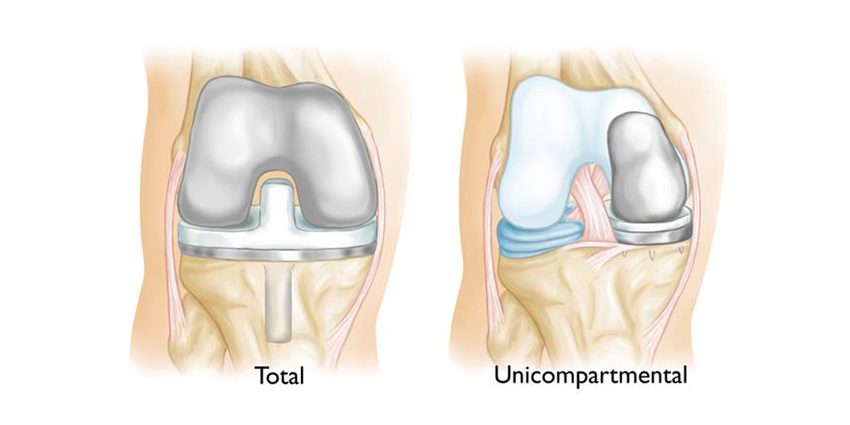
Apparently so, according to a new review of epidemiological trends and outcomes among knee arthroplasty patients in the United States. This new study out of Case Western Reserve, titled “Epidemiological Trends and Outcomes of Unicompartmental Knee Arthroplasty Among 104 Million Patients in the United States,” appears in the December 2024 edition of The Journal of Arthroplasty.
“Our primary motivation for examining trends in unicompartmental knee arthroplasty utilization stemmed from the relatively recent relaxation of patient selection criteria, which now accommodate for younger individuals (patients as young as 50) and those with higher BMIs [body mass index] (patients with BMIs as high as 40),” explained lead author Parshava Sanghvi, an M.D. candidate at Case Western Reserve University School of Medicine in Cleveland, Ohio.
“We hypothesized that these changes may have led to an increase in unicompartmental knee arthroplasty utilization, and we were also interested in seeing how the characteristics of a typical unicompartmental knee arthroplasty patient have evolved over time.
“Furthermore, with the increasing adoption of robotics in orthopedic surgery, we wanted to determine whether the proportion of unicompartmental knee arthroplasties performed robotically has risen as well.”
“The classic criteria for unicompartmental knee arthroplasty, established by Scott and Kozinn, identified the ideal patient as being over 60 years old and weighing less than 82 kg [180.78 pounds],” explained Sanghvi to OTW.
“However, these guidelines are largely unsupported, as current studies have shown that only 5% of unicompartmental knee arthroplasty procedures align with these parameters.”
“In practice, current unicompartmental knee arthroplasty criteria are much more expansive, often including patients in their 50s and with higher BMIs. Furthermore, in comparison to total knee arthroplasty [TKA], unicompartmental knee arthroplasty is generally preferred in cases where osteoarthritis is confined to a single compartment and the anterior cruciate ligament is intact.”
Still a Small Percentage of Knee Arthroplasty Cases
“While the use of unicompartmental knee arthroplasty has increased over the past decade, the relatively low number of cases performed annually has made it challenging to accurately characterize national trends.”
“We were fortunate to have access to one of the largest medical databases allowing us to better capture trends in the U.S. and conduct a sub-analysis on the use of robotic-assisted unicompartmental knee arthroplasty. We hope this study encourages further research into patient selection criteria and procedural techniques to enhance outcomes and support the broader adoption of unicompartmental knee arthroplasty.”
Study Results
The Case Western Reserve research team pulled data from multiple sites within one healthcare network. They found:
- The number of unicompartmental knee arthroplasty cases increased 590% from 2012 to 2022, from an admittedly low base (241 to 1,662).
- The incidence rate unicompartmental knee cases vs other knee arthroplasty cases increased on an average annual basis by 50%, again, from a low base.
- The statistical prevalence, also from a low base, increased 51.3%.
- The most common complication associated with unicompartmental knee arthroplasty was conversion to total knee arthroplasty (TKA)—and that occurred in 39.9% of the cases.
- As of 2022, there were 68 robotic unicompartmental knee arthroplasties performed within the dataset studied, a 518% increase from the 11 performed in 2012.
Will more surgeries drive outcomes research?
“Our most important result lies in the projected prevalence of unicompartmental knee arthroplasty reaching 0.30% by 2035 if current trends persist.”
“This substantial anticipated growth underscores the rising popularity of unicompartmental knee arthroplasty, likely driven by its less invasive nature, superior preservation of bone stock, and faster recovery time.”
“While unicompartmental knee arthroplasty remains less commonly performed than total knee arthroplasty due to higher long-term revision rates, the projected increase in utilization may encourage further research aimed at improving long-term outcomes for unicompartmental knee arthroplasty patients.”
“Unicompartmental knee arthroplasty has become an increasingly viable option for many more patients, offering advantages over total knee arthroplasty, such as being less invasive and allowing for faster recovery. While further research is needed to address the higher conversion rates to TKA, advancements like robotic-assisted unicompartmental knee arthroplasty may help mitigate some of the long-term complications currently observed, improving outcomes for future patients.”
