
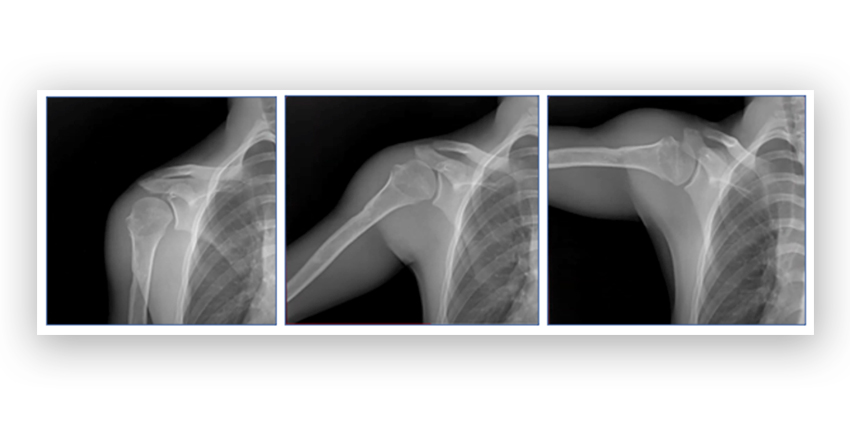
Compared with conventional static imaging, dynamic digital radiography is able to provide a better understanding of shoulder injuries and the outcomes after treatment, Emory Healthcare researchers say.
The Konica Minolta Healthcare Dynamic Digital Radiography is a more nuanced type of X-ray system that can capture motion thus providing more quantitative data on shoulder motion than a standard X-ray system can provide.
The study, “Variation in Scapulohumeral Rhythm on Dynamic Radiography in Pathologic Shoulders: A Novel Diagnostic Tool,” which evaluates dynamic digital radiography, was published on January 30, 2023 in the Journal of Shoulder and Elbow Surgery.
The research team led by Angel X. Xia, M.D., also found that dynamic digital radiography gives clinicians a reproducible method to measure and compare the scapulohumeral rhythm which helps them better understand how much the motion of the shoulder is impaired.
“With dynamic digital radiography, we can very clearly see how structures move in relation to one another in the shoulder anatomy in a way we’ve never been able to see before—both when it is moving and at a particular time point,” Eric R. Wagner, M.D., MSc., assistant professor in the department of orthopedics at Emory University and director of upper extremity research at Emory Healthcare, said in a statement.
“We can obtain more critical information from this dynamic motion analysis using dynamic digital radiography, and that is an inherent advantage for both diagnosis and post-surgical treatment monitoring.”
During their study, 121 patients had their shoulders analyzed using dynamic digital radiography. In order to assess motion properly, the researchers did scans first with the arm at rest by the patient’s side and then all the way to maximal abduction when the arm is raised away from the body. They gathered data on humeral abduction, scapular upward rotation and scapulohumeral rhythm.
They reported that dynamic digital radiography was a cost-effective, simple way to assess shoulder motion and that it provides reliable reporting on the ways different shoulder pathologies causes motion difficulties.
Dynamic digital radiography is not fluoroscopy. It provides both static and dynamic images at high speed and low dose, allowing the physician to visual how the anatomical structures of the shoulder interact and change over time, the researchers explained.
