
Novaxomx GmbH, a subsidiary of curasan AG, has entered into an exclusive license agreement with Lysatpharma, setting the stage for research and product development in biosurgical treatment therapies.
Under the terms of the agreement and per the press release, Novaxomx has “obtained the exclusive rights to use Lysatpharma’s patented ‘exosome’ technology for the research of optimizing biomimetic osteoconductive carrier materials by biologizing them with exosomes.”
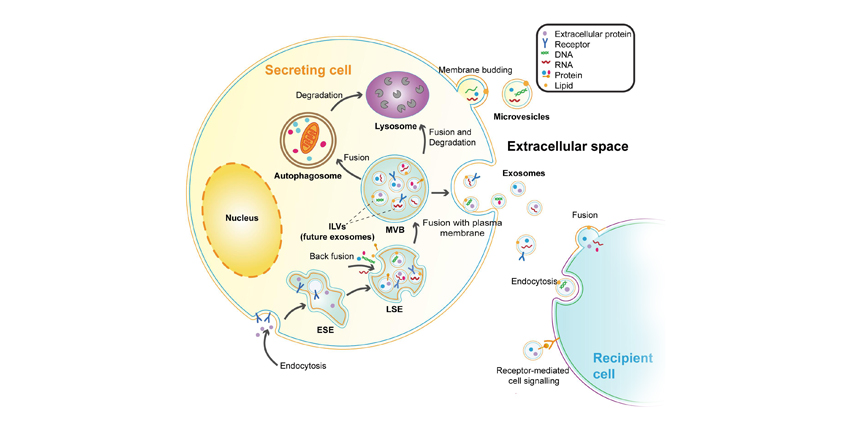
According to the press release, the exosomes are bioactive nanovesicles “secreted from human stem cells or derived from autologous platelets. They are introduced with the carrier materials and enable intercellular communication, which is crucial for regenerative processes in the human body.”
Based in Germany, Novaxomx focuses on the advancements of biosurgical therapies for use in musculoskeletal diseases and tissue regeneration. Its goal is to improve regenerative processes following spinal fusion procedures.
OTW spoke with curasan Business Development Manager Leonie Früh about the licensing agreement. When asked about Novaxomx’s decision to partner with Lysatpharma: “Lysatpharma, also a Portfolio company from the Xlife Sciences AG, owns the patent of the exosome-technology.”
What sets Lysatpharma apart from its competitors, Früh explained to OTW is: “The patented approach of Lysatpharma GmbH is based on the use of defined bioactive components extracted from cell preparations and thus forms the basis for the development and use of a new class of biologics. In this respect, Lysatpharma has already successfully generated promising data from in vitro studies as well as preclinical studies.”
Früh continued, “In addition, Lysatpharma is located in Eisenberg, where Novaxomx was also founded, and maintains an intensive cooperation with the University Hospital in Jena, which allows us to effectively advance research and development there.”
Novaxomx is already looking to the future when it comes to the exosome technology. When asked about its indications, Früh informed OTW, “There are a couple of indications we want to use it for. For now, the indication range is wide (since its research): orthopedics, traumatology, spine surgery, controlled bone and tissue regeneration (except chronic skin wounds and burns), osteoarthritis (except rheumatoid arthritis), osteomyelitis, sports medicine (including cartilage repair).”
