
Missing Spondy/Pelvic Floor Muscle Link
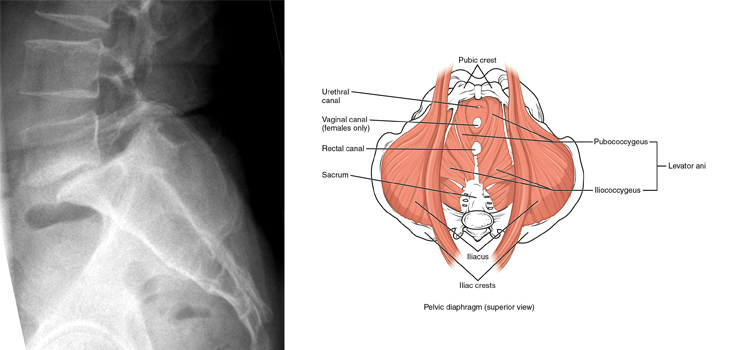
Could there be a relationship between degenerative spondylolisthesis (DS) and the health of a woman’s pelvic floor muscle?
A new case-control cohort study looked at just that topic. The research, performed by American and German researchers, is entitled, “Degenerative Spondylolisthesis Is Related to Multiparity and Hysterectomies in Older Women,” and appears in the November 1, 2017 edition of Spine.
Jacek Cholewicki, Ph.D., the Walter F. Patenge Professor and Director of the Michigan State University (MSU) Center for Orthopedic Research in the MSU College of Osteopathic Medicine, told OTW, “The question as to why the prevalence of lumbar DS is several times higher among women than men is fascinating.”
“Although several factors contributing to DS, such as the orientation of facet joints, pelvic incidence (orientation), and hormonal effects, have been identified, they do not fully explain such large sex differences. Our laboratory and expertise were well-suited to examine the possibility that abdominal muscle dysfunction following multiple pregnancies and/or abdominal surgeries could precipitate degenerative spine changes leading to DS. Knowing the mechanisms leading to DS could then help in designing preventative strategies.”
The authors wrote, “A total of 322 women between the ages of 40 and 80 (149 with DS and 173 controls) filled out a questionnaire providing information about their demographics, the number of full-term pregnancies, the number and types of abdominal surgeries (including cesarean section and hysterectomies), and age at menopause among other items.”
Dr. Cholewicki told OTW, “The most important and surprising result was that in addition to multiple pregnancies, hysterectomy was a significant risk factor for developing DS. Although more research is needed, our results suggest that pelvic floor muscle dysfunction stemming from vaginal deliveries and hysterectomies might be the cause of higher prevalence of DS in women than men.”
“Perhaps assessment and restoration of pelvic floor muscle function should be a part of active recovery from childbirth or hysterectomy surgery to reduce the risk of DS.”
“The dysfunction of pelvic floor muscles may be linked to DS in older women.”
“An orthopedic surgeon, recommending conservative treatment prior to the DS surgery, should consider assessment and rehabilitation of pelvic floor muscles, especially when referring female patients to physical therapy.”
$6 Million for Bone Infection Research
Telephus Medical LLC, based in San Diego, California, will no doubt be able to make substantial progress on bone infections in the coming months.
A $6 million grant has been awarded to Edward Schwarz, Ph.D., Telephus founder, chief scientific officer, and Burton Professor of Orthopaedics and Director of the Center for Musculoskeletal Research (CMSR) at the University of Rochester Medical Center (URMC) by the National Institutes of Health (NIH).
According to the Telephus news release, “This grant will allow URMC to create an integrated multidisciplinary translational research program devoted to studying bone infections. The CMSR has been among the top five NIH-funded orthopedic research centers in the nation for over ten years, and 2017 awards are estimated to be $28 million by the end of the year.”
“Dr. Schwarz has been the top NIH-funded orthopedic researcher in the nation over the past three years.”
“The significant unmet medical need seen in patients with devastating bone infections is an indication that new, integrated approaches are direly needed to successfully treat these patients. Bone infections such as staphylococcal periprosthetic joint infections, are often disabling and life threatening,” said Dr. Schwarz.
“We are delighted that the NIH recognizes MRSA (methicillin-resistant Staphylococcus aureus) osteomyelitis as an area in critical need of novel therapeutic approaches,” said Mark Benedyk, Ph.D., founder and chief executive officer of Telephus. “We look forward to continue working with Dr. Schwarz to advance our understanding of critical bone infections and developing potentially life-saving treatments for patients who need them.”
“Telephus has the exclusive global license from the University of Rochester to develop, manufacture, and commercialize immunotherapy programs based on inventions from the Schwarz Laboratory that target AtlA, a key protein involved in the bone infection pathology seen in patients suffering from MRSA osteomyelitis.”
“Based on this research, Telephus is advancing TPH 101, a proprietary targeted immunotherapy and monoclonal antibody that neutralizes a key enzyme subunit of AtlA and allows a patient’s immune system to clear deep bone infection. This adjuvant immunotherapy approach is designed to enhance antibiotic activity without the side effects that additional antibiotics would generate in MRSA osteomyelitis patients.”
Dr. Schwarz told OTW, “We know that Staphylococcus infections following elective total joint replacement surgery are not random and tend to occur in patients with an immunological susceptibility.”
“Our previous work showed that patients who have a strong antibody response against iron sensing determinant proteins (Isd) are susceptible to septic death following prosthetic joint infection. With this new NIH funding, we will formally investigate whether these anti-Isd antibodies mediate septic death in patients with S. aureus osteomyelitis, and elucidate the mechanism.”
“We also discovered that mice and people who recover from life-threatening S. aureus osteomyelitis do so because they are able to mount an antibody response to the autolysin (AtlA) proteins. Thus, by passively immunizing patients with these anti-AtlA antibodies, they should be able to overcome their susceptibility to S. aureus infections, and achieve excellent outcomes following revision surgery for S. aureus PJI. Telephus is currently testing this with its TPH 101 program that is heading toward clinical trials.”
OrthoCarolina Opens 40th Location!
With an eye towards patient expectations, OrthoCarolina has just opened the doors to its newest orthopedic office—OrthoCarolina South Park.
According to OrthoCarolina, this location “…features an interior design and aesthetic layout different from its other locations, intended to be more modern, fresh and inviting. It also offers a clinic framework that puts patient experience at the forefront of the entire process through outstanding service.”
“The highest standard of care and patient satisfaction comes from truly understanding customer expectations and enabling employees to meet and exceed them,” said Bruce Cohen, M.D., CEO of OrthoCarolina. “OrthoCarolina South Park is going beyond the stereotype of healthcare by exceeding customer expectations when they visit the doctor.”
“The model of care at OrthoCarolina South Park serves as a pilot program for OrthoCarolina, which plans to roll out the customer-oriented staff training and standards of excellence to its other 39 locations across North and South Carolina.”
“Designed with modern aesthetics and creature comforts including fruit-infused water, a coffee bar and valet service, the office has implemented technology to create seamless transitions throughout the visit. Additional features include a kiosk check-in and iPad supported patient forms. OrthoCarolina South Park has a six-person concierge team to help manage patient flow and needs, complemented by a highly-trained customer service team empowered to offer consistent first-class customer care.”
“Every patient is important to us and deserves an individualized, personalized experience when they walk through our doors,” says Dr. Cohen. “It’s our job to provide them with the best visit possible and it is our hope that by surpassing the boundaries of what is expected OrthoCarolina will create greater desire for patients to return and recommend.”
Dr. Cohen told OTW, “We needed a new office to accommodate overflow from our offices close to uptown Charlotte, and were searching for a location that is convenient for many of our patients. The South Park area of Charlotte is a very popular location to work, live and visit.”
Asked how they decided what sort of things to put in the new location, Dr. Cohen told OTW, “We are at capacity for our adult subspecialties in our center city/uptown locations and needed to expand these centers. Opening a sub-specialty based location in a desirable location like SouthPark seemed to fill a number of needs for us. As we continue to make patient care our top priority, with the opening of this new office we specifically focused on ways to improve patient-centered work flow, technology to track wait times, valet, patient concierge and to offer patients an inviting, calm environment.”
