
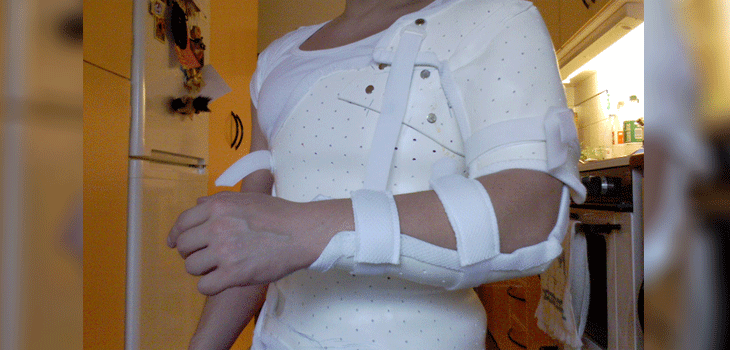
Move over hip and knee replacements. Shoulder replacements—the new kids on the block—are gaining on you. The number of total and partial shoulder replacements performed in the U.S. increased from 18, 000 in the year 2000 to more than 45, 000 in 2013 according to the American Academy of Orthopaedic Surgeons (AAOS). The Loyola University Health System performed 10 times more total and partial shoulder replacements in 2015 than it did in 2010.
According to Loyola’s press release, the shoulder provides more range of motion than any other joint. In a total shoulder replacement, the surgeon replaces the arthritic joint surfaces with a highly polished metal ball and a plastic socket. In a partial shoulder replacement, called hemiarthroplasty, the surgeon replaces only the ball, while keeping the patient’s natural socket. While still less common than hip and knee replacements, shoulder replacements are just as effective in relieving joint pain, according to the AAOS.
Nickolas Garbis, M.D., of Loyola, notes that shoulder replacement surgery typically requires a night in the hospital. The patient wears a sling for about a month, and then gradually increases activity resuming most activities within three months. Full recovery takes six to ten months.
Shoulder replacements have a long life span. Ninety percent are still working after 10 years and 80% after 20 years.
While patients are becoming more knowledgeable about shoulder replacements, Garbis notes that awareness still lags behind that of hip and knee replacements. “Many patients who could potentially benefit are not aware that a shoulder replacement is an option that can relieve pain and significantly improve function.”
