
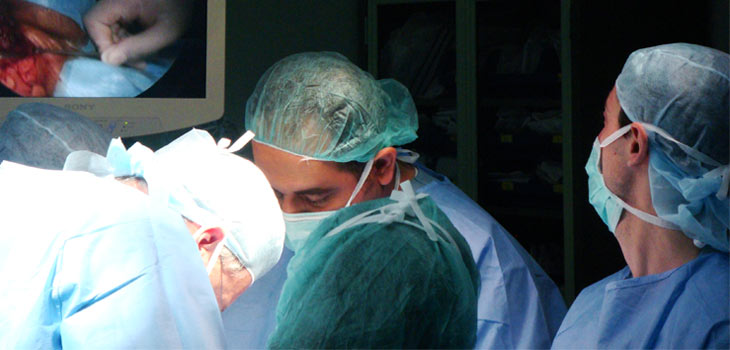
Patients who are black, Hispanic, on Medicaid or are uninsured may be less likely to receive regional anesthesia during hip and knee replacement surgery, according to a study of more than 1 million orthopedic surgeries being presented at the Anesthesiology 2015 annual meeting. This possibly places these patents at a greater risk of serious complications.
Jashvant Poeran, M.D., Ph.D., assistant professor in the Department of Population Health Science & Policy at the Icahn School of Medicine at Mount Sinai, New York. said, “There is increasing evidence that regional anesthesia could reduce the risk of death and blood clots, compared to general anesthesia, during hip and knee replacement surgery. Specific patient groups are significantly less likely to receive regional anesthesia, and this disparity may have a negative impact on their outcomes.”
In the study, researchers looked at anesthesia data on 1, 062, 152 hip and knee replacement surgeries between 2006 and 2013 from a national claims database. They specifically focused on regional anesthesia: either neuraxial anesthesia (which includes spinal blocks and epidurals) or peripheral nerve blocks.
Twenty-two percent of patients had neuraxial anesthesia, 18% had a peripheral nerve block, while the rest received general anesthesia. Hispanic patients were 24% less likely, Medicaid patients 20% less likely, uninsured patients 16% less likely, and black patients 10% less likely to receive either form of regional anesthesia.
The researchers found that hospital choice played a role. It appeared that a patient’s likelihood of receiving regional anesthesia was tied to the hospital where their doctors performed the surgery.
