
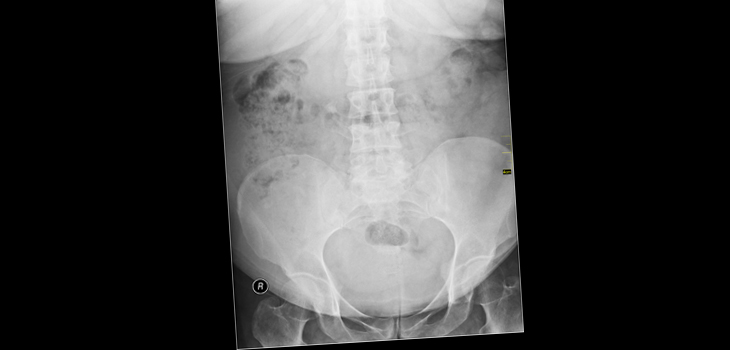
Morbidly obese individuals undergoing elective hip replacement surgery had a higher rate of postoperative complications and infections than did patients in other weight classifications, researchers at the Wagner College physician assistant program reported.
Compared with normal weight patients, the morbidly obese—defined as those with a body mass index of 40kg/m2 or more—lost more blood during the procedure, spent a longer time in surgery and were more likely to have postoperative wound infections.
“Based on our findings we recommend this group delay elective hip replacement surgery and undergo weight-loss counseling to help reduce unfavorable complications and the overall cost of a hospital stay, ” said Kristina Denenkamp, PA, to a MedPage Today reporter. “We wanted patients to be evaluated for weight-loss counseling—whether it be diet or bariatric surgery—before they rush into the hip replacement surgery, “
Denenkamp and her colleagues examined the records of 464 patients who underwent hip replacement surgery between January 2012 and November 2013 at Staten Island University Hospital. They found that normal weight patients who underwent hip replacement surgery had a significant decrease in the risk of postoperative complications.
Being overweight increased the length of the procedure, but not enough to be statistically significant. While being clinically obese increased the length of time needed for the procedure it was being morbidly obese that resulted in a trend that rose to the level of significance.
Ten percent of the patients in the study were morbidly obese. The researchers believe that the failure of this group to reach statistical significance for the measurement of time in surgery was due to the small numbers of patients in that category. They found a similar pattern with blood loss. The only group experiencing significant differences in blood loss was the morbidly obese.
Where hip replacement surgery was concerned, the researchers found that normal weight appeared to be protective but morbidly obese patients were at risk.
