
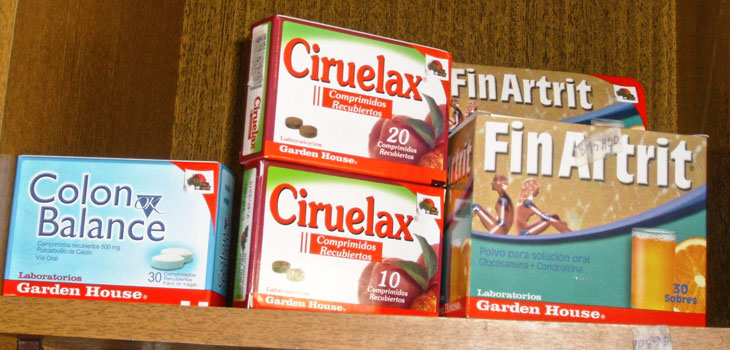
Do the dietary supplements glucosamine and chondroitin sulfate slow joint damage in the knees of people suffering from mild arthritis? Past studies have said “no.” A recent new study of the effectiveness of the supplements—that measured more than 30 parts of the knee joint—resulted in a “maybe.” Among the people who took the supplements over a period of two years, only a few parts of the knee joint differed from those who did not take any supplements.
The experts continue to differ on the subject. Daniel Solomon, M.D., M.P.H., a rheumatologist and pharmaco-epidemiologist at Brigham and Women’s Hospital in Boston (who was not involved in the study) said, “This is yet another set of data arguing against any disease-modifying benefit of glucosamine and chondroitin sulfate.”
Another researcher, Krishna Chaganti, M.D., M.S., a rheumatologist at the University of California, San Francisco, who also was not involved in the study, said “[The results] may reflect that drugs or therapies that affect joint structure in osteoarthritis are likely to have an effect earlier in the course of the disease.”
Johanne Martel-Pelletier, Ph.D., of the Osteoarthritis Research Unit at the University of Montreal Hospital Research Centre, led the research and was one of the study’s authors. The group examined data on 600 participants in an osteoarthritis study sponsored by the U.S. National Institutes of Health Osteoarthritis Initiative. Bioiberica, a Spanish pharmaceutical company that manufactures glucosamine and chondroitin supplements, funded a part of the study.
Some of the study participants were taking bone-building drugs, some were taking pain relievers such as ibuprofen and others were taking glucosamine and chondroitin supplements.
As reported by Reuters Health, the researchers used magnetic resonance imaging (MRI) to examine the spaces between the participants’ joints and monitored the participants’ arthritis symptoms and disease progression over 24 months.
They found that the people who took both anti-inflammatory pain medications and glucosamine and chondroitin supplements had less pain and milder changes due to disease in one part of the knee joint than those who took the pain drugs but no supplements. However, among those who were not taking pain medication, there was no difference in pain between people taking the supplements and those who did not. In the end the people who took supplements had similar disease progression to those who did not take them.
Solomon told Reuters Health that the few statistically significant differences in knee anatomy that were seen may have been due to random variation. His belief as a result of the study is that, in general, the results do not change the bottom line for osteoarthritis patients: glucosamine and chondroitin do not help.

When I was Information Officer at a local Humane Society, a Glucosamine/Chondroitin Sulfate manufacturer of dog supplements gave us cases of a liquid to add to old dogs’ food–because it wasn’t selling. Our vet department used it for a while on our older dogs, and found it wasn’t doing anything, so we began to hand out the bottles to people who came through and wanted to take them. All the employees got to take all they wanted. Nobody ever mentioned that it was of any use other than being a bother to mess with. Finally the rest of the cases timed out and we put them in the dumpster. Meanwhile, I used up a whole bottle on our old male dog, but to no discernible advantage. He did a lot better with a half a baby aspirin…but I didn’t like to give them to him very often.