
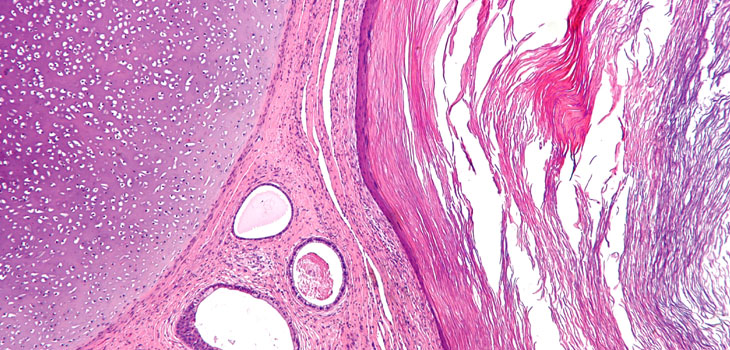
In what may turn out to be a breakthrough discovery, stem cell researchers from UCLA have identified the origin cells and tracked the early development of human articular cartilage. This could provide a new cell source and biological roadmap for therapies to repair cartilage damage from osteoarthritis. Denis Evseenko, M.D., assistant professor of orthopedic surgery and head of UCLA’s Laboratory of Connective Tissue Regeneration, published the study online in December in the journal Stem Cell Reports.
Articular cartilage, a specialized tissue formed from cells called chondrocytes protects the bones of joints from forces associated with load-bearing and impact and allows nearly frictionless motion between the articular surfaces—the places where bones connect with other bones in a joint.
Cartilage injury and a lack of cartilage regeneration often lead to osteoarthritis, which involves the degradation of joints, including cartilage and bone. Osteoarthritis currently affects more than 20 million people in the U.S., making joint-surface restoration a major medical priority.
While numerous scientists have studied the ability of different cell types to generate articular cartilage, none of the current cell-based repair strategies—including using expanded articular chondrocytes or mesenchymal stromal cells from adult bone marrow, adipose tissue, sinovium or amniotic fluid—have generated long-lasting articular cartilage tissue in the laboratory.
Until now. As reported in Science Codex, for their study Evseenko and his colleagues used complex molecular biology techniques to determine which cells grown from embryonic stem cells were the progenitors of cartilage cells, or chondrocytes. They confirmed the growth of these progenitor cells into cartilage cells and monitored their growth progress, observing and recording genetic features, or landmarks, that indicated the growth stages of these cells as they developed into cartilage cells.
By bridging developmental biology with tissue engineering, fellow researchers believe that Evseenko’s discoveries represent a critical “missing link, ” providing scientists with checkpoints to tell if the cartilage cells are developing correctly.
“We began with three questions about cartilage development, ” Evseenko said. “We wanted to know the key molecular mechanisms, the key cell populations and the developmental stages in humans. We carefully studied how the chondrocytes developed, watching not only their genes but other biological markers that will allow us to apply the system for the improvement of current stem cell-based therapeutic approaches.”
With the progenitor cells and the landmarks of cartilage development identified, Evseenko believes that an effective cellular therapy for diseased or damaged joint cartilage could be tested in human trials within three years. Such stem cell–based therapies could make many current knee and hip replacement surgeries unnecessary, offering patients the ability to regrow lost cartilage, keep their bones intact and avoid the discomfort and risk of major joint-replacement surgery.

HELLO ,
SHALL I JOIN RESEARCH AS IM DEMONSTRATOR OF CELL BIOLOGY AT FACULTY OF MEDICINE
Yesterday I discovered that the Mayo Clinic is also exploring this new treatment for osteoarthritis. To avoid a hip replacement a friend is going to the Jacksonville, FL facility for evaluation this coming Tuesday. Your article states that treatment is not expected until 3 years from
December 2013. Has treatment already started at UCLA?
Ina Kacani
UCLA Alumna