
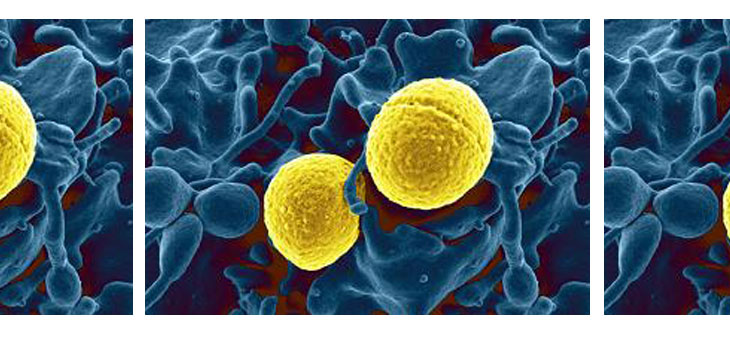
Researchers from Vanderbilt University are tackling osteomyelitis and the reason for it, namely, Staphylococcus aureus (“staph”). Microbiologist Eric Skaar, Ph.D., MPH, and colleagues have identified a staph-killing compound that may be an effective treatment for osteomyelitis, and they have developed a new mouse model that will be useful for testing this compound and for generating additional therapeutic strategies.
James Cassat, M.D., Ph.D., a fellow in Pediatric Infectious Diseases led the mouse model studies. Working with colleagues in the Vanderbilt Center for Bone Biology and the Vanderbilt University Institute of Imaging Science, Cassat developed micro-computed tomography imaging technologies to visualize a surgically introduced bone infection in progress.
“The micro-CT gives excellent resolution images of the damage that’s being done to the bone, ” said Dr. Skaar, the Ernest W. Goodpasture Professor of Pathology, in the June 20, 2013 news release. “We found that staph is not only destroying bone, but it’s also promoting new bone growth. Staph is causing profound changes in bone remodeling.”
“We’re not aware of any other bone infection models where you can pull the bacteria out of a bone and count them in a highly reproducible manner, ” said Dr. Skaar. “From a therapeutic development standpoint, we think this model is going to allow investigators to test new compounds for efficacy against bone infections caused by staph or any other bacteria that cause osteomyelitis.”
Asked about the most important findings, Dr. Skaar told OTW, “There are two clinically important findings from our study. The first is that we have created an animal model of osteomyelitis that allows for precise quantification of both bacterial survival within the bone, as well as pathogen-induced changes in bone remodeling. This was accomplished in the absence of an indwelling foreign body, which has been a necessary prerequisite for precise quantification of bacterial burdens in other animal models of osteomyelitis. To our knowledge, this is the first animal model to identify specific bacterial genes important for both intraosseous survival and pathologic bone remodeling. A second important finding from our study is that Staphylococcus aureus produces toxins that modulate bone remodeling. In addition to bone destruction at the infection site, we observed profound new bone formation by two weeks post-infection, indicating that S. aureus is changing the kinetics of bone remodeling.”
Dr. Skaar added, “We have created an animal model of osteomyelitis that will allow pre-clinical testing of novel antimicrobials and vaccines, and also allow identification of specific S. aureus genes required to colonize and ultimately destroy bone.”

When will this technology be available everywhere?