
Medicare’s prospects are looking up.
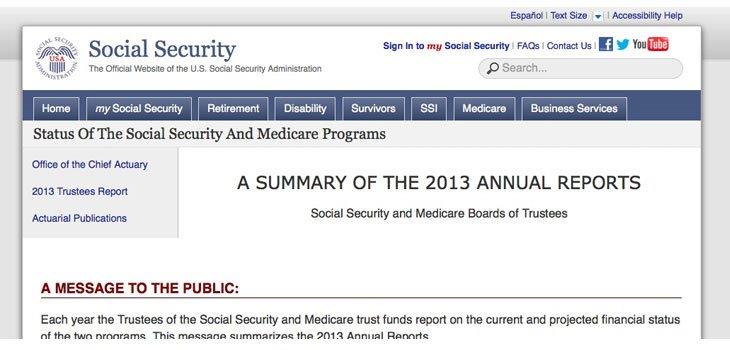
In their 2013 report released on May 31, 2013, Medicare trustees projected two additional years to the trust fund’s solvency until it runs out of money in 2026. That’s a little like saying the Titanic will hit the iceberg a couple of miles closer to Newfoundland.
“Medicare cannot sustain projected long-run programs in full under currently scheduled financing, and legislative changes are necessary to avoid disruptive consequences for beneficiaries and taxpayers, ” stated the report.
This means Medicare will run out of money as most Baby Boomers hit their mid-70s.
The modest improvement in the outlook for HI (hospital insurance) long-term finances is principally due to:
- Lower projected spending for most HI service categories, especially for skilled nursing facilities to reflect lower-than-expected spending in 2012 and other recent data;
- Lower projected Medicare Advantage program costs that reflect recent data suggesting that certain provisions of the Affordable Care Act will reduce growth in these costs by more than was previously projected;
- Refinement in projection methods that reduces assumed per beneficiary cost growth during the transition period between the short-range projections and the long-range projections. Partially offsetting these favorable changes to the projections are somewhat lower projected levels of tax income that reflect lower-than-expected tax income in 2012.
Docs Safe
The trustees project that Part B of Supplementary Medical Insurance (SMI), which pays doctors’ bills and other outpatient expenses, and Part D of SMI, which provides access to prescription drug coverage, will remain adequately financed into the indefinite future because current law automatically provides financing each year to meet the next year’s expected costs.
The trustees also project that total Medicare cost (including both HI and SMI expenditures) will grow from approximately 3.6% of gross domestic product (GDP) in 2012 to 5.6% of GDP by 2035, and will increase gradually thereafter to about 6.5% of GDP by 2087.
“What we’re finding is that there’s a significant transformation of the private and public sector in terms of how payments are made, ” Health & Human Services Secretary Kathleen Sebelius said at a news conference.
