
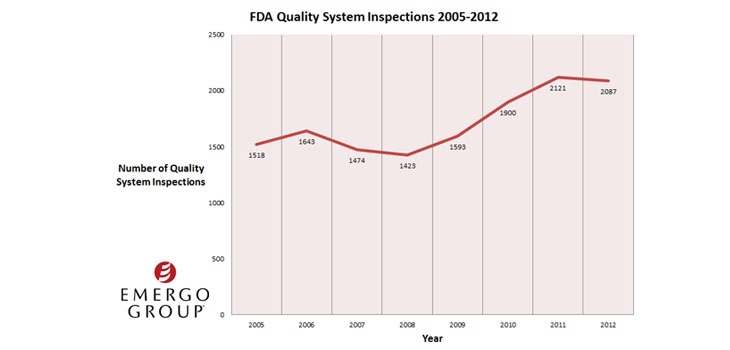
The FDA has been conducting more inspections over the last four years, resulting in more warning letters to medical device manufacturers.
That’s according to FDA inspection records showing agency medical device quality inspectors have issued warning letters to manufacturers at an increasing rate since 2005.
Over 500 More Inspections
Stewart Eisenhart, of the Emergo Group, writes in a May 8, 2013 posting that the steady increase in Form 483 observation and warning letter citations coincide with higher rates of FDA Quality System Regulations compliance inspections since 2008. “FDA officials conducted 1, 423 quality system inspections at medical device manufacturers in 2008, compared to 2, 121 in 2011 and 2, 087 in 2012. Clearly the more quality system inspections U.S. regulators conduct, the more noncompliance issues they observe and cite, ” wrote Eisenhart.
Based on the types of noncompliance issues inspectors are finding, Eisenhart says companies should pay closer attention to Corrective and Preventative Action (CAPA) and Production and Process Controls (P&PC). Those issues each accounted for 30% of 483 observations last year, well ahead of Management, Design and Document Controls.
Quality Systems Citations Double

Eisenhart also found that quality system observations resulting in citations have also dramatically increased from 74 in 2007 to 164 in 2012. Since 2009, the number of warning letters has climbed steadily, with the single biggest increase between 2011 and 2012. “Has the increase in these citations resulted from a recent slump in quality system compliance among medical device manufacturers? Probably not—more likely, higher frequency of inspections has identified issues that may have been missed by less frequent and vigorous inspections prior to 2009.”
According to Eisenhart, the FDA 483 warning letter data supports medical device industry claims that quality system citations have increased over the last four years. He added, “Medical device firms should expect the trend of stepped-up FDA inspections to continue through the Obama administration’s second term. However, the data also provides a clear indication of which QSR quality system components most commonly draw scrutiny from inspectors; medical device manufacturers active in the U.S. market now know to pay particular attention to their CAPA and P&PC procedures to ensure compliance with 21 CFR Part 820.”
