
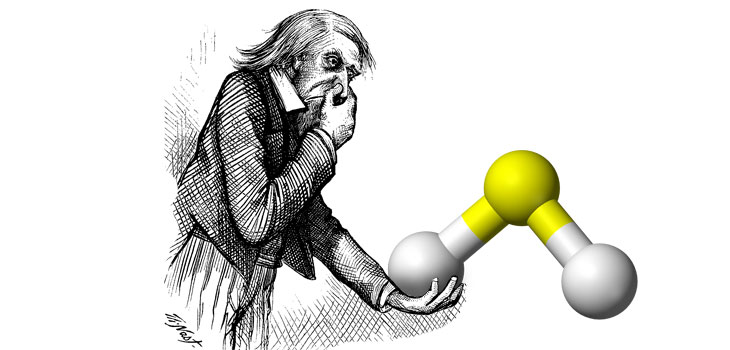
That’s odd. The foul smelling substance known as hydrogen sulfide (H2S) could actually be what some people need. A team of researchers from the University of Exeter Medical School have discovered that a drug molecule, which slowly generates H2S, reduces swelling and inflammation in arthritic joints.
Professor Matt Whiteman, of the University of Exeter Medical School, said the research, which is published online in the Journal of Cellular and Molecular Medicine, could pave the way for more effective treatments of arthritis and other inflammatory conditions. Professor Whiteman said in the April 30, 2013 news release: “H2S is widely dismissed as a toxic and foul-smelling environmental pollutant, but it has recently been shown to be created in humans and animals by a specific set of enzymes. Why would the body do this if it had no benefit? Our research has shown that the key to unlocking the therapeutic qualities of H2S is through slow release, mimicking the body’s own production.”
The team has previously shown that H2S levels were increased by up to four times in the knee joints of patients with joint diseases such as rheumatoid arthritis, but intriguingly the higher H2S levels strongly correlated with a lower number of inflammatory cells in the joint.
Professor Whiteman added: “A patient will usually visit their doctor with a joint already inflamed, swollen and painful. Since the compound worked after arthritis was established, it may be useful in treating arthritis in the future. Many compounds can prevent arthritis in the laboratory, but of course nobody knows when they will get arthritis. Having a class of compounds which reduce inflammation and swelling when arthritis is already active is extremely exciting. These molecules may also be useful in other inflammatory conditions, and even in the inflammatory aspects of diabetes and obesity.”
The study was part of a large collaboration funded by the Wellcome Trust and Arthritis Research UK, involving Professor Philip K. Moore and Dr. Julie Keeble from King’s College London, as well as researchers at the National University of Singapore and Queen’s University Belfast. The team used primary human cells as well as a model of arthritis. Rheumatoid arthritis causes some cells to proliferate too quickly in the joint and secrete substances which promote tissue inflammation, swelling and eventually joint destruction. However, the H2S donor molecule prevented this secretion, and inhibited the activity of several enzymes which cause inflammation. In the arthritis model, the compound did not prevent arthritis, but was highly effective at reducing joint inflammation and swelling once arthritis was established, suggesting H2S-based compounds may one day be useful in clinic.
