
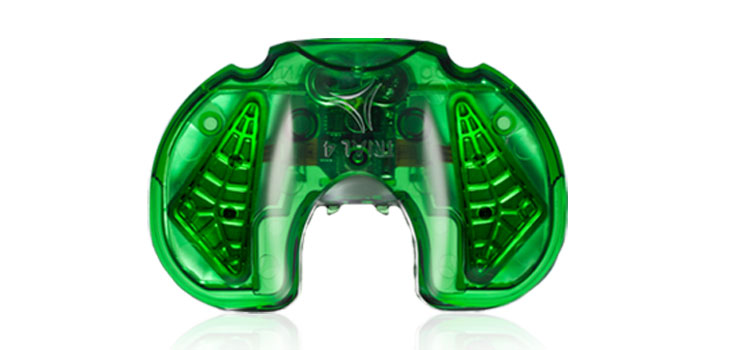
Orthopedic surgeons at New York University’s Langone Medical Center are the first in the Northeast to use a new sensor that incorporates microelectronics and wireless communication to give them real-time data about the positioning and tension of ligaments during total knee replacement (TKA) surgery.
Called the OrthoSensor Knee Balancer, the device and its accompanying software provides visual, quantifiable information to increase a surgeon’s ability to measure and ensure optimal position, fit and balance before removing it from the surgical site and permanently fixing the new joint components.
“Traditionally, orthopaedic surgeons determine the fit, stability and alignment during a total knee replacement surgery based on conventional mechanical instruments, their knowledge, ongoing training and years of experience performing similar surgeries, ” said Richard Iorio, M.D., the Dr. William and Susan Jaffe Professor of Orthopaedic Surgery and chief, adult reconstructive division, Department of Orthopaedic Surgery at NYU Langone Medical Center. “Having this simple, removable tool enables surgeons to match calibrations to a patient’s unique ligament structure and skeletal alignment before implanting the new joint.”
The American Academy of Orthopaedic Surgeons reports that most patients who undergo total knee replacement surgery are between 50-80 years old—a population that is increasing with the aging baby boomer generation. According to OrthoSensors, for a knee implant to function correctly, proper balance of the soft tissues—such as ligaments, tendons and muscles—is critical. Connecting soft tissues too loosely or too tightly inhibits the joint’s full range of motion or can create minor instability. An imbalance can also result in the implant failing prematurely.
“New research and treatments are needed to address a population that, when combined with greater activity on the one hand and overweight problems on the other, are driving increases in the demand for hip and knee replacements, ” said Peter Walker, Ph.D., research professor, Department of Orthopaedic Surgery, NYU Langone Medical Center. “Being able to assign precise balance and calibration data to specific conditions during the procedure will be helpful in providing the optimal treatment for a particular patient’s musculoskeletal condition.”
