
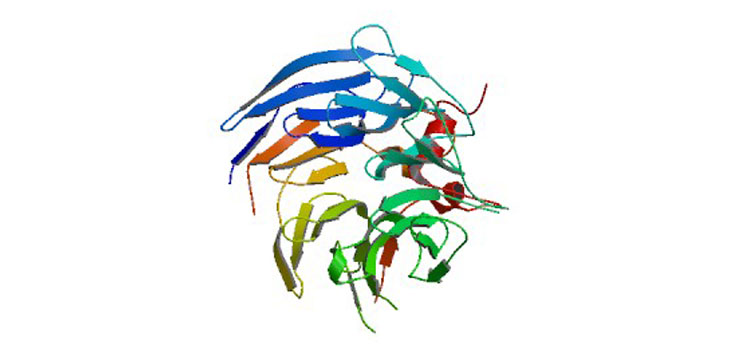
Researchers from the University of Pennsylvania School of Veterinary Medicine have discovered that a protein called Jagged-1 stimulates human stem cells to differentiate into bone-producing cells. This protein could help both human and animal patients heal from bone fractures faster and may form the basis of treatments for a rare metabolic condition called Alagille syndrome.
The study, published in the journal Stem Cells, was authored by three members of Penn Vet’s departments of Clinical Studies-New Bolton Center and Animal Biology: postdoctoral researchers Fengchang Zhu and Mariya T. Sweetwyne and associate professor Kurt Hankenson, who also holds the Dean W. Richardson Chair in Equine Disease Research. Last November Dr. Hankenson and his former doctoral student Mike Dishowitz launched a company—Skelegen—through Penn’s Center for Technology Transfer Upstart program.
But what about BMPs (bone morphogenic protein)? “But it has become clear that BMPs have some issues with safety and efficacy, ” Dr. Hankenson said in the February 13, 2013 news release. “In the field we’re always searching for new ways for progenitor cells to become osteoblasts so we became interested in the Notch signaling pathway.”
The team investigated one of the proteins that acts in this pathway by binding to the Notch receptor, Jagged-1. They had previously shown that Jagged-1 is highly expressed in bone-forming cells during fracture healing and that introducing Jagged-1 to mouse stem cells blocked the progression of stem cells to osteoblasts. Next the researchers decided to see what happened when Jagged-1 was introduced to human stem cells. There they came upon a very different result.
“It was remarkable to find that just putting the cells onto the Jagged-1 ligand seemed sufficient for driving the formation of bone-producing cells, ” he said.
Patients with a rare disease known as Alagille syndrome frequently have mutations in the gene that codes for Jagged-1. Individuals with this condition have problems with their metabolism that severely affect their livers but also tend to have challenges with their skeletal system and break bones easily.
Dr. Hankenson told OTW, “There were two findings that were quite surprising. First, that the human progenitor cells (MSC) behaved opposite to the mouse MSC. The mouse MSC responded to Jag1 in a manner consistent with what would have been hypothesized from previous mouse work, but in hindsight Jag1 having a positive effect on cells becoming osteoblasts is very reasonable when we consider the genome wide association studies and the Alagille patients. The second surprising finding was that Jag1 appears to have direct positive effects on controlling the program of osteoblastogenesis. While we still have more work to do in this area, this suggests that pathways other than BMP signaling may be useful for promoting bone regeneration.”
Dr. Hankenson also told OTW, “Orthopedists should know that the scientific community is actively responding to the recognition that practicing orthopedists need new agents to regenerate bone. While more development is required, we are actively pursuing the development of this new technology as a bone regeneration therapeutic.”
