
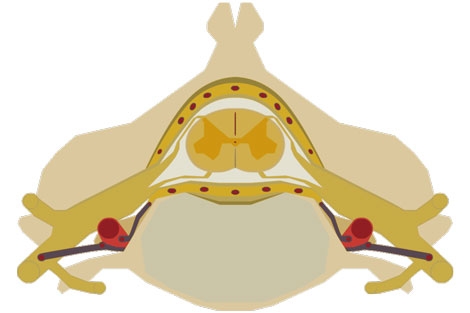
As reported in the August 2012 issue of Neurosurgery, some breathtaking human clinical trials have been reported injecting stem cells into the spinal cord. Until now, no United States-based clinical trials have attempted delivery of biological therapies directly to the spinal cord for treatment of amyotrophic lateral sclerosis (ALS). The reason? There has been no meaningful U.S. Food and Drug Administration-authorized cell candidate nor a validated delivery approach.
The Departments of Neurosurgery and Neurology of Emory University, Atlanta, took on the problem of the delivery approach. Researchers wanted to assess the safety of delivery of a neural stem cell-based treatment into the upper lumbar segments of the amyotrophic lateral sclerosis (ALS) spinal cord. It was the first U.S. Food and Drug Administration-authorized phase I trial of this procedure.
Researchers treated 12 patients with either unilateral or bilateral injections. Each injection deposited 100 000 neural stem cells derived from a fetal spinal cord and each microinjection series was comprised of five injections (10 μL/injection) separated by 4 mm. Group A, which consisted of non-ambulatory patients, underwent unilateral (n = 3) or bilateral (n = 3) lumbar microinjections. Groups B and C were ambulatory (n = 3 each) and received unilateral or bilateral injections. Researchers followed patients clinically and radiologically to assess the potential toxicity of the procedure.
Of the 12 patients who received a transplant there was one instance of transient intraoperative somatosensory-evoked potentials depression and one episode of urinary retention requiring Foley catheter reinsertion. By discharge, none had a documented motor function decrement. Two patients required readmission and reoperation for cerebrospinal fluid leak or suprafascial wound dehiscence (n = 1 each). Two deaths occurred at 8 and 13 months post surgery but neither was related to the surgical transplant.
The researchers’ experience with their 12 patients supports the procedural safety of unilateral and bilateral intraspinal lumbar microinjection. Investigators now plan to perform cervical and combined cervical and lumbar microinjections in ALS patients.
