
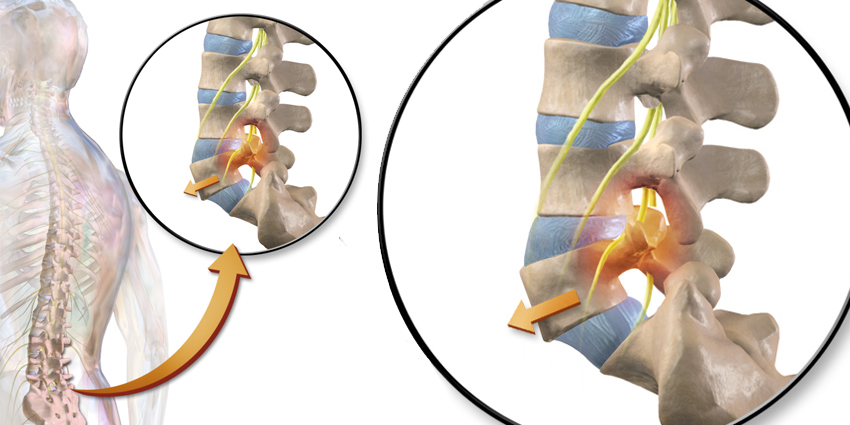
If you HAD to make a choice, fusion or decompression (not both), which would you select? Answer, depends. In other words, if you ask 10 spine surgeons, you might get 13 answers, including, mostly, “depends.”
A new Hospital for Special Surgery (HSS) study seems to bear that out.
The study, “Current treatment and decision-making factors leading to fusion vs. decompression for one-level degenerative spondylolisthesis; survey results from members of the Lumbar Spine Research Society and Society of Minimally Invasive Spine Surgery,” published in the November 1, 2022 issue of The Spine Journal, researchers looked at the common radiographic parameters that appeared to steer treatment decisions one way or the other.
“The purpose of this study was to describe current degenerative spondylolisthesis treatment practices and identify both the radiographic and clinical factors leading to the decision to fuse segments for one level degenerative spondylolisthesis,” the researchers wrote.
Data was collected via surveys administered to members of Lumbar Spine Research Society and the Society of Minimally Invasive Spine Surgery. Surgeons were asked to rank radiographic and clinical parameters based on their importance and to provide their demographics and treatment practices.
The researchers ranked the most important, top 3 most important, and top 5 most important parameters.
Overall, 381 society members completed a survey. Almost 20% of the members fused all cases, 39.1% fused more than 75% of cases, 17.8% fused 50% to 75% of all cases and 23.2% fused less than 25%. The most common decompressive technique was a partial laminotomy (51.4%), followed by full laminectomy (28.9%). The researchers calculated that 82.2% of the survey respondents instrument all fusion cases.
Instability (93.2%), spondylolisthesis grade (59.8%), and laterolisthesis (37.3%) were the most common radiographic factors that influenced treatment decisions. The most common clinical factors that lead to fusion were mechanical low back pain (83.2%), activity level (58.3%, and neurogenic claudication (42.8%).
“The most common radiographic parameters impacting treatment are instability, spondylolisthesis grade, and laterolisthesis while mechanical low back pain, activity level, and neurogenic claudication are the most clinical parameters,” the researchers reported.
Study authors include Kyle W. Morse, M.D., Micharl Steinhaus, M.D., Patawut Bovonratwet, M.D., Gregory Kazarian, M.D., Catherine Himo Gang, MPH, Avani S. Vaishnav, MBBS, Virginie Lafage, Ph.D., Renaud Lafage, Ph.D., Sravisht Iyer, M.D., and Sheeraz Qureshi, M.D., MBA, all from the Hospital for Special Surgery in New York.

I 82 year old active person dx in 2020 with Spinal stenosis L4-5 radiology and spondylosis and arthritis in canal along with leg cramps and left foot falling alseep. In 2022 L3 is now involved and foot tingles are happening more often. I exerciser every day and 2 Did have recommended surgery. I would like to see a Dr at HSS in NYC so can you recommend one. Thank you.
I have numbness and tingling in my toes and L3-L4: Moderate diffuse disc bulging and facet arthropathy cause bilateral moderate to severe lateral recess and foraminal changes. Central canal stenosis is noted AP diameter of the spinal canal measuring 8 mm L4-L5: Severe facet arthropathy minimal spondylolisthesis and posterolateral disc bulging cause bilateral lateral recess and foraminal compromise. Central canal compromise is noted AP diameter of the spinal canal measuring 9 mm. Is there help for me without fusion? I have been diagnosed with multiple autoimmune diseases.