
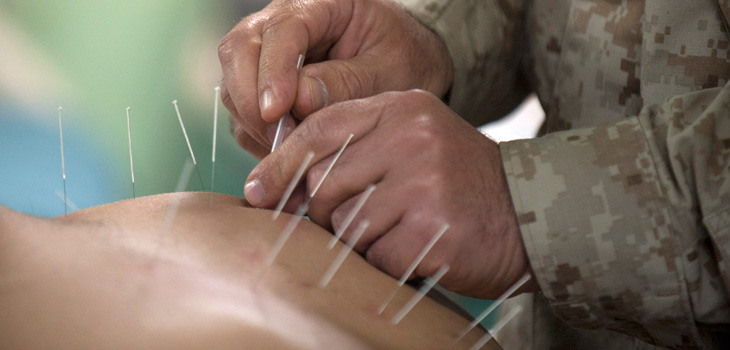
New research from the National Institutes of Health (NIH) presents strong, possibly conclusive, evidence that specific forms of non-pharmacological treatments may alleviate different types of specific pain. Some examples of the complementary and alternative therapies (CAM) mentioned in the study include such mind and body approaches as acupuncture, massage, meditation, relaxation therapy, and yoga as well as dietary supplements and herbs.
While it is common for patients who live with chronic pain to seek treatments alternative to or in addition to conventional medical treatments, it was not clear, until recently, which type of complementary treatment options could be the most effective in alleviating different types of chronic pain.
Patients have many alternative medicine options for treating pain but there are almost no credible or clear guidelines for patients to turn to for their specific type of pain, and more clinical research is necessary to determine this.
A recent study conducted by the National Center for Complementary and Integrative Medicine (NCCIM) reveals that yoga and acupuncture can be effective for treating back pain, acupuncture and tai chi can be effective for treating osteoarthritis of the knee, massage therapy can be effective in alleviating neck pain and relaxation techniques can also be an effective method for treating pain related to severe migraines and headaches.
Complementary and Alternative Therapies
Chronic, unrelieved pain and a reluctance to use potentially addictive prescription pain medicines are some of the reasons that patients turn to complementary and alternative therapies.
By definition, chronic pain is a long term condition and many medications which address chronic pain may induce adverse side effects or not be effective. Both patients and their physicians know this so it is understandable that they consider alternative treatment options for pain relief.
Unfortunately, while these alternative therapies seem to be widely used by patients, research and scientific evidence of the effectiveness and explanation of CAM for pain management is very limited.
And the results of existing research into CAM techniques is somewhat inconclusive, as there is both evidence that it may work and that it may not. One of the reasons why the conclusions of these studies may seem inconclusive is that there are many different types of CAM and many different types of pain. Conclusions from past research pertaining to specific type of CAM and its effect on specific types of pain have been more conclusive.
For example, there has been strong research supporting the effectiveness of acupuncture, massage and spinal manipulation, progressive relaxation and yoga for chronic low back pain.
Acupuncture has been shown to be beneficial for treating arthriitis, however there is currently limited or inconclusive evidence to indicate whether other methods such as yoga, herbal remedies and tai chi are beneficial.
There is conclusive evidence that acupuncture is effective in reducing the intensity and frequency of migraines or tension headaches.
Spinal manipulation has been shown to be effective in relieving chronic tension and cervicogenic headaches, which is the type of headache related to neck pain. There is currently mixed evidence relating to the connection between various CAM and other types of pain.
NIH Study
A recent study conducted by lead researcher Richard L. Nahin, Ph.D. at the National Center for Complementary and Integrative Medicine, at the National Institute of Health (NIH), whose findings were published in the journal Mayo Clinic Proceedings, examined clinical trial evidence of the efficacy and safety of complementary treatment approaches to pain management.
“For many Americans who suffer from chronic pain, medications may not completely relieve pain and can produce unwanted side effects. As a result, many people may turn to nondrug approaches to help manage their pain, ” said Dr. Nahin.
The purpose of the study was to examine the currently existing evidence of the effectiveness of different CAM treatment options on different types of pain.
The study’s conclusions were based on a review of randomized clinical trials over the past 50 years conducted in the United States. Results indicate that acupuncture and yoga are safe and effective for treating back pain whereas osteoarthritis of the knee is best treated by acupuncture and tai chi. Researchers also found that if done often and repeatedly massage therapy is effective for short term relief of neck pain whereas relaxation techniques are most effective for treating pain related to severe headaches and migraines.
In a 2007 National Health Interview Survey, back pain was noted to be the most common reason why people turn to CAM, followed by neck pain and joint pain. A subsequent survey revealed that 40% of patients used at least one method of CAM for pain management.
According to NCCIH, $30 billion is spent on complementary health approaches in the U.S. annually and alleviation of pain is the top reason. Until now, there have not been many scientific conclusions of the effectiveness of complementary approaches on pain management. Most physicians and patients use medication for pain management, however the drugs are known to have potentially dangerous side effects and are not always effective.
Also, the human body builds a tolerance to prescription medication and needs more and more to have the same effect of alleviating the pain, with those potentially negative side effects still present. However, it is very uncommon for patients who do yoga, massage therapy and tai chi, as well as any other CAM therapies to experience negative side effects.
CAM therapy works because it treats pain by focusing on the physical and emotional aspects of pain. For example, massage therapy alleviates pain by targeting the physical problem area (muscle tissue) and proves relieving pain physically, as well as targeting the mental aspect of pain by inducing a release of serotonin, which is a neurotransmitter that stabilizes mood and releases feelings of pleasure. In this way, both physical pain as well as emotional pain (anxiety) are relieved during the massage. For this reason, massage therapy is effective for short term pain relief, as the perception of pain is diminished during and shortly after the treatment.
It is not surprising that mind and body approaches work in relieving pain. In a recent 2016 study conducted at University of Pittsburg, neuroscientific researchers have found that since the same neural networks connect the cerebral cortex to the adrenal medulla, we can now better understand how mental states such as stress and depression impact the human body on a physical level.
When the individual experienced de-stressors, such as yoga or meditation, the body released “feel-good” neurotransmitters, which helped to decrease physical and emotional perception of pain. In another past study published in the Archives of Internal Medicine researchers released conclusions that benefits of massage therapy for pain are not only short term but also long term for back pain and chronic tensions headaches.
If you are considering using or recommending CAM as treatment for chronic pain, it should not be used as a method for postponing a visit to the doctor for an evaluation. It is always beneficial to speak to your healthcare provider about the pain experienced and all the treatment options available.
In my practice, I believe that an integrative approach is always the best one.
Personally I always recommend that patients put effort towards healing not only the physical pain but also the mental, since the mind and body are evidently connected and this is especially prominent when it comes to the feeling of pain.
It is important to understand that the treatment process should contain a variety of solutions which are integrated into the patient’s recovery process. The biophsycosocial model entails that both diagnosis and treatment plan should integrate the biologic, psychologic and social aspects of well-being into the treatment plan.
Author’s Information: Didier Demesmin, M.D. is an Interventional Pain Medicine Specialist who is double Board Certified in Anesthesiology and Pain Medicine. He is the president and founder of University Pain Medicine Center. He graduated from Robert Wood Johnson Medical School, where he received the prestigious award for Academic Excellence in Anesthesiology. He completed an Interventional Pain Medicine Fellowship Program at Columbia University, College of Physicians and Surgeons/St. Luke’s-Roosevelt Medical Center in New York. Dr. Demesmin is affiliated with some of the finest hospitals in Central New Jersey, including Saint Peter’s University Hospital, Robert Wood Johnson University Hospital, JFK Medical Center, and Somerset Medical Center.
