
Boise, Idaho has been ground-zero in the government’s anti-trust battle to keep hospitals from monopolizing a local market.
Are orthopedic surgeons pawns or simple collateral damage in this economic battle to capture patients?
Or, is there room for a nimble business response by those surgeons that can keep them independent and in control of their own practice of medicine?
A group of surgeons in Boise decided to act. Here, in their own words, is their story. — Walter Eisner, Senior Writer, Orthopedics This Week
Across the country, hospitals are rapidly buying up medical groups to form integrated delivery networks. They do so under the guise of providing better care at lower costs—a core goal of the Patient Protection and Affordable Care Act.
The reality is hospital-based care, especially through the emergency room, is anything BUT affordable. While hospitals rely on their emergency room to capture fees, the referral sources, billing and reimbursement—the cost is passed on to the patient. The cost actually goes up, not down.
Hospitals really are vying for control of the primary referral base. Better yet is the ability to refer directly to hospital-employed specialists, effectively bypassing independent practitioners completely. This model allows the hospitals to keep the referrals in-house—bringing more money to the hospital. And, thus, a monopoly is born….
Private Practice Squeezed
Private practices have been left to fight over a shrinking referral base and often receive only Medicare and Medicaid patients, or worse, the uninsured. Often these physicians are left to cover hospital call responsibilities with a poor payer mix and middle of the night cases—certainly not the ideal mix for a family or any kind of life outside of medicine.
As a small, private practice orthopedic group in Idaho, we were feeling the squeeze. We were at ground zero during a period that labeled Boise, Idaho as a medical battleground. Everyone seemed to be at war.
First, there were the independent doctors who were at war with the two major hospitals in town, claiming the hospitals had too much power over every aspect of the medical pipeline, dictating which tests and procedures to perform, how much to charge and which patients to admit.
Hospital Consolidation Battles
Then, a battle erupted between the two hospitals themselves. St. Alphonsus went to court seeking an injunction to stop St. Luke’s from buying another physician practice group, arguing that the hospital’s monopolization of the market was enabling it to drive up prices and to demand exclusive or preferential agreements with insurers.
Soon after that, the Federal Trade Commission and the State of Idaho launched an investigation and subsequent lawsuit against St. Luke’s claiming the hospital become too powerful in Boise—effectively stifling the competition.
Operating in such a volatile environment left us with the realization that the overall outlook for an independent practitioner was grim to say the least. Or, so it seemed.
The Surgeon Choices
Our group, Allied Orthopedics in Boise, Idaho took this trend head on—and I believe we have found the winning solution in the middle of it all. As hospital acquisitions and mergers were unfolding before us, our referral base began to diminish, revenue slowed, and we essentially were at the mercy of the hospitals we served—taking more call to produce less results.
With more specialists being hired in-house, there was going to be a point in time where our business would cease to be profitable. We were not in a safe position.
With the writing on the wall, we had to choose from one of three scenarios—sell, establish a franchise outpatient clinic, or something altogether different. Selling our practice did not sound enticing to any of our partners, or our futures, and we didn’t really consider the franchise scenario because, honestly, we didn’t know it existed. At the time, there was not too much in the way of a viable option. There just was not a lot of information out there.
Direct Orthopedic Care
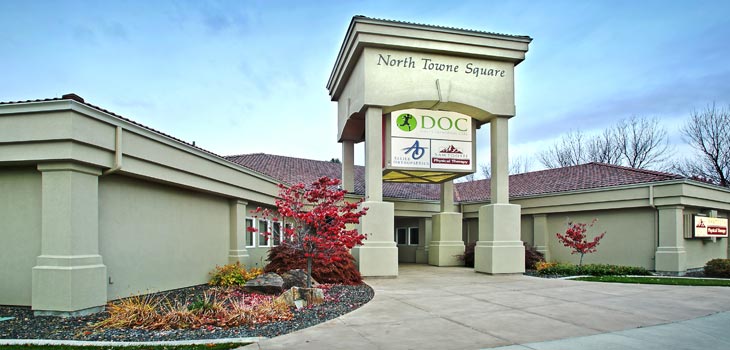
We chose to be different. We established a joint venture called Direct Orthopedic Care (DOC)—a stand-alone, walk-in orthopedic urgent care facility serving patients 365 days a year. Not only does this center provide patients with direct access to the specialists they need, but they completely bypass the long waits and high costs of the emergency room. This truly is in line with the core values of providing quality healthcare at an affordable price—our patients have been thrilled with the service and our practice has removed the hospital’s control over our referral base-completely.
 Now that patients see value, the benefits we have experienced are ten-fold.
No longer at the mercy of the hospitals, we are once again autonomous. Our patients come directly to us and remain our customers. We are now in the driver’s seat with regards to billing and reimbursement. We can cut costs and improve efficiencies as we see fit.
Navigating Stark Law
There were some looming obstacles to overcome. For example, we spent a considerable amount of time and resources setting up our structure so that it stayed within the guidelines of Stark Law. Stark Law places a limitation on certain physician referrals. It prohibits physician referrals of designated health services for Medicare and Medicaid patients if the physician (or an immediate family member) has a financial relationship with that entity. It was definitely a difficult topic to wade through, but after hours of legal advice, we successfully developed a model that adheres to those constraints.
We also needed to establish where we would do our surgeries—again, within Stark Law compliance. Our group is part of a physician-owned, short-term care non-emergency surgery center operated by Surgical Care Affiliates. We are able to secure some priority arrangements to treat our patients. If a DOC patient has an immediate need, we can typically get the procedure done within 24 hours.
The way our joint venture is structured also lends itself to an ASC [ambulatory surgery center] or physician/hospital venture arrangement. ASCs and hospitals alike benefit from additional surgical cases at their facility and welcome the increased case volume.
Market Response
Even with these obstacles, we were getting somewhere between 450 and 500 patients a month in less than one year in business (over 3, 000 in just the first 8 months). Eighty percent of those were new to the practice—certainly a huge volume of new revenue. Even better, we are currently expanding to a total of four locations and are looking for a couple of others.
 With regards to partners, we started with four. As others took note of what we were doing and saw the success that we were having, they naturally wanted to be involved. We now have 16 partners locally. This has created a referral network independent from the primary care physicians—giving us complete control of our practice.
We are now consulting other orthopedic physicians around the country to create their own DOC joint venture. It’s an opportunity for independent practices to take ownership back from the hospitals, or simply to stop out-patient migration to larger markets, effectively helping to secure the practices’ future.
Joint Venture Model
When we began the process, we really had to start from zero. It took a team working upwards of 20 hours a week for over 10 months to build a successful model. In putting in the time and investment, DOC has created a turn-key solution that far exceeds the franchise model.
The DOC joint venture (JV) model consists of 25% ownership to the corporate entity, with the bulk of ownership retained by the local physicians at 75%. With this structure, DOC doesn’t just take money off the top and move on to the next opportunity. Everyone is invested. Everyone has “skin-in-the-game.” If something fails, all parties suffer. DOC was purposely structured in this manner because it keeps everybody focused on a positive outcome.
As we discovered with a franchise-type model, on the other hand, there were inherent flaws. A franchisor often charges an exceptionally large establishment fee, comes to your market to train you for a month or so, and walks away. You’re left with fending for yourself for all the legal, credentialing, staffing, marketing pieces that are so critical to success. There is no vested interest in the outcome whatsoever.
Logistics
With the JV model, when a new group is on board, the DOC corporate group will send a team of people on-site to handle everything—allowing the physician group to focus on their practice. DOC hires the clinical and non-clinical staff, creates the business entity, works through the credentialing process with Medicare and private payers, purchases equipment, hires PA’s, and oversees the marketing initiatives. DOC can even have commercial real estate services available if a building is needed to be purchased or built from the ground up.
All of the elements are executed by the DOC corporate structure—from the phone lines to the front desk receptionist. With growth experienced thus far, DOC’s purchasing power brings value to the JV partners because the purchase price of costly equipment, including MRI, decreases significantly.
Hospital Hostility
It’s not all been a bed of roses, admittedly. We have certainly had some resistance and even hostility in some cases, from our local hospitals. Prior to our joint venture, our practice felt a little bullied at times and we could feel that they were intentionally “squeezing” us out of the market. There were certainly no apologies on their part—it was simply a business strategy aimed at achieving complete dominance.
Their strategy was to hire additional orthopedists to work directly for them, while our strategy directed all marketing efforts toward facilities. Hospitals have been overcharging patients and insurance companies for years with facility fees, padded costs, and an array of other itemized billing buffers.
It actually serves to make our model more appealing to consumers. Our direct-access model is inarguably more efficient and cost-effective. It didn’t matter how angry the local hospitals were—they simply can’t compete with that.
Also interesting to note, our single-biggest customer tends to be employees of the single biggest hospital-employed physician groups. It is the hospital’s own employees that comprise the most visits to DOC.
Control Your Destiny
To summarize, it has been somewhat of an arduous road, but well worth the trip. I guess our take home point would be—despite the changing landscape of medicine, and the trend toward hospital monopolization—there are opportunities out there. Do not sit back idly and allow things to unfold around you. Our small, independent practice took measures to remain autonomous and maintain control of our own destiny…and so can you.
