Johnson & Johnson (JNJ), the largest medical company in the world, announced sales and earnings results for the first three months of 2020 this week and, as part of that announcement, provided a detailed analysis and outlook for the remainder of the year, in particular, the effect of COVID-19 on sales of all JNJ products.
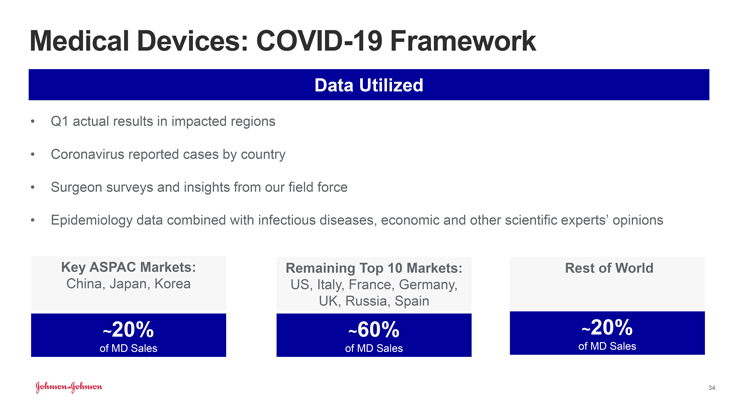
The underlying U.S. and global surgery procedure data came from JNJ’s many thousands of employees and physician customers. In terms of market intelligence, this may well be the most comprehensive, bottom-up analysis of COVID-19’s impact on healthcare issued by any private or governmental entity to date.
Orthopedic Procedure Volumes for the Rest of 2020
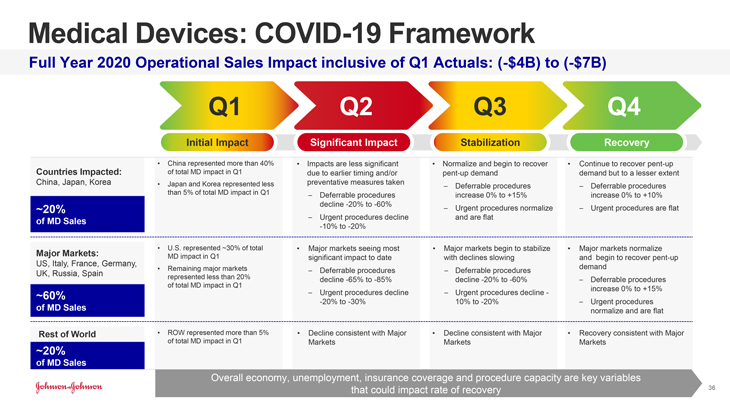
JNJ’s analysts provided a framework for thinking about U.S. and global orthopedic procedure volumes and then estimated a range of expected procedure volumes for the final nine months of 2020.

JNJ’s orthopedic product sales fell 6.5% (operational sales) from 2019 levels in the first three months of 2020 as orthopedic procedures were canceled, first in China, and then in the U.S. and the rest of the world. The biggest effect came in March, that last month of the quarter.
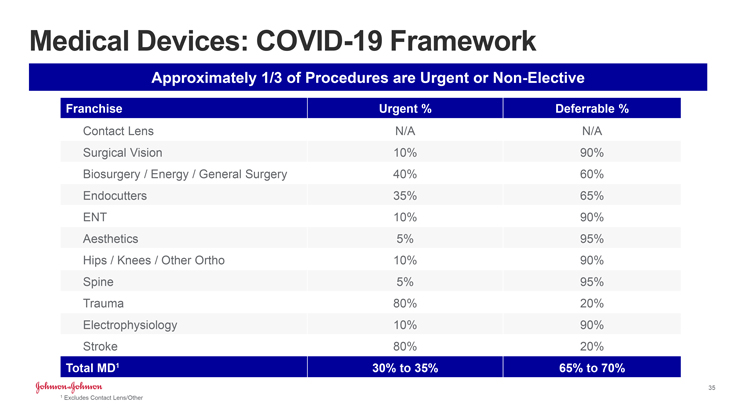
During the worst of the COVID-19 impact, JNJ’s management is expecting that 90% of all hip and knee cases will be judged to be deferable, that 95% of all spine cases could be deferable and that 20% of trauma cases could also be deferable.
The practical impact of that, according to JNJ, is that deferable procedures are likely to decline for the second quarter, three months ended June 30, by 65-85%.
From July through September, JNJ’s analysts expect orthopedic surgery volumes will stabilize and start to recover and by the final three months of 2020, will be at normal to 15% above normal levels.
The following four tables and charts from the Johnson and Johnson investor presentation provide more details.