
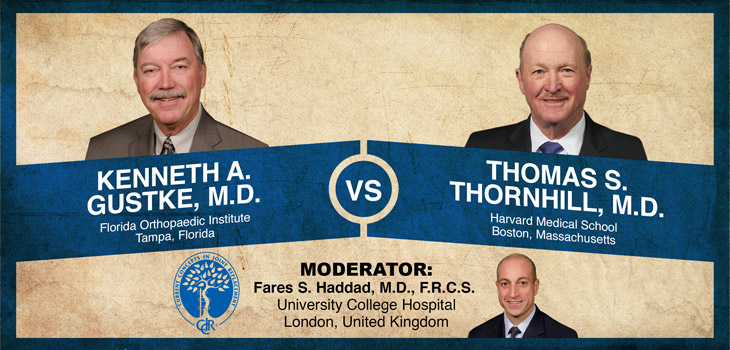
Dr. Thornhill: I’ve got a bit of a problem—the fact is that simulation is here to bridge the increasing gap in resident education.
I do simulation. I was involved in starting it, but I have one serious concern. The challenges Ken talked about—the technology, the sub-specialization, the workload, the financial pressures, and also the ASCs [ambulatory surgical centers] and satellites—oftentimes don’t have residents and they don’t get the exposure with the easiest cases to really do.
The elephant in the room, though, is duty hours. Malcolm Gladwell talked about “10,000 hours” in his book Outliers: The Story of Success and if you stratify, 48 weeks, 80 hours a week in 5 years, they get about 25% surgery, under 5,000 hours of surgery, which does not meet Malcolm Gladwell’s standards.
More work in less time. Fewer patient interactions. Reduced operative experience. And the OR constraints for the attendings now—their outcomes are being measured, time is money, and it takes time to educate a resident.
Here’s my concern. Simulation cannot recreate the stress of independent surgery on real patients. We call it “The relaxed attitude of the non-combatant.” As a resident, I was very sure when I had an attending with me. When I did it myself for the first time, I wasn’t as sure.
William Halsted believed in complete immersion. Interns should be interned. Residents should be resident. The fact is that you graded responsibility with every other night call. Then you advanced when the faculty told you you should. It was see one, do one, teach one.
My American philosopher, Yogi Berra said, “The future ain’t what it used to be.”
There are whole bunches of different types of simulation. Ken went through them. I think the most important thing is we use mannequins, we use cadavers, we now have full procedure simulators, virtual reality, artificial intelligence and a whole bunch of things.
But they don’t really give you the recreation of what happens to a patient who is under anesthesia in your hands. It’s called a learning curve, I think, because if you get in trouble in surgery and you can’t become more calm, you’re going to be a problem.
And when you get your comfortable zone and those surgeons in the audience will know, it’s a wonderful feeling you have knowing that whatever you do, you can get out of it. There’s sort of a moral hazard…we treat cadavers extremely well. But if you really harm them or a mannequin, it’s not like a real patient.
I like Henry Ford’s quote about the need that we must innovate much more than we do now with simulation. Henry Ford said, “If I’d listened to the customers, I would have given them a faster horse.”
And now we have virtual reality and …Ken showed some in orthopedics… one in the airline industry which he talked about…these simulators are terrific. People have actually been able to fly planes.
