
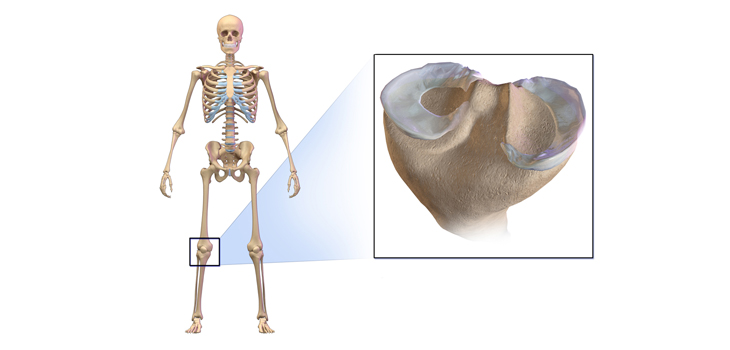
A global panel of almost 50 orthopedic clinical experts sponsored by Össur, a global leader in non-invasive orthopedic equipment headquartered in Iceland, recently developed the first ever Consensus Document on Cartilage and Meniscal Rehabilitation Protocols “for patients recovering from knee cartilage-related injuries, including contained and uncontained cartilage defects, and meniscal repair or transplantation.”
The recommendations detailed in the Consensus Document were gathered at the 1st Global Cartilage Expert Consensus Meeting last Fall held at Foothill Ranch, California. Prof. Jörg Jerosh of Johanna-Etienne Hospital, Neuss Germany chaired the meeting.
During the two-day meeting, the clinicians discussed important developments in cartilage and meniscal repair techniques, and the potential of future therapies like “stem cells for treating cartilage injuries, and the importance of alignment in cartilage repair.” They also developed “treatment recommendations for patients recovering from cartilage or meniscal repair procedures.”
One of the presenters at the meeting was pioneering orthopaedic surgeon, Robert LaPrade, M.D. of the Steadman Clinic in Denver, Colorado. He discussed the golden standard of care in performing osteoarticular allograft.
“A meeting like this is very important because we had several generations of surgeons here,” LaPrade said.
“Some of us were involved in the infancy of the ACI [autogenous cartilage implantation] procedure. We have seen some patients have problems with post-operative rehabilitation by not using bracing. For the newer generation of surgeons to be able to see how we treat patients and use that as part of their practice could help them advance their care of patients.”
LaPrade explained to OTW the process of gathering an expert consensus. He said, “Due to the feedback we gathered with a structured and standardized questionnaire and keynote lectures given by key opinion leaders, before the workshops we had a strong foundation for the discussion among the experts. Following the face to face discussion in the workshops, the experts drafted a recommendation for rehabilitation which was finally consented within a Delphi Round following the meeting. So, at the end we were able to agree on a detailed recommendation with clear guidance for our colleagues.”
All the recommendations include suggestions on weight-bearing, range of motion (ROM), bracing and physical therapy.
Contained Lesions Guidelines
The panel’s recommendations for contained lesions, detailed here, were divided into four treatment phases over about 13 weeks.
For rehabilitation after marrow stimulation and surface restoration of a contained cartilage lesion, the panel advised physicians to employ a protocol of progressive weight-bearing from complete immobilization during the first two weeks, to partial weight bearing during Phase II (Weeks 3-6).
They didn’t advise full weight-bearing until after 13 weeks post-op. In addition, the panel suggested that non-impact cardio activities be avoided until 12 weeks, and to prohibit running until around 24 weeks after the procedure.
For patients recovering from surface reconstruction (osteochondral auto/allograft) of a contained cartilage lesion, the panel called for full weight-bearing by week 3 and blood flow restriction therapy during the first two phases (Weeks 1-6).
The panel also supported the use of an unloading knee brace like Össur’s Rebound Cartilage brace, both during immobilization and while the patient slowly regains full range of motion and weight-bearing.
