
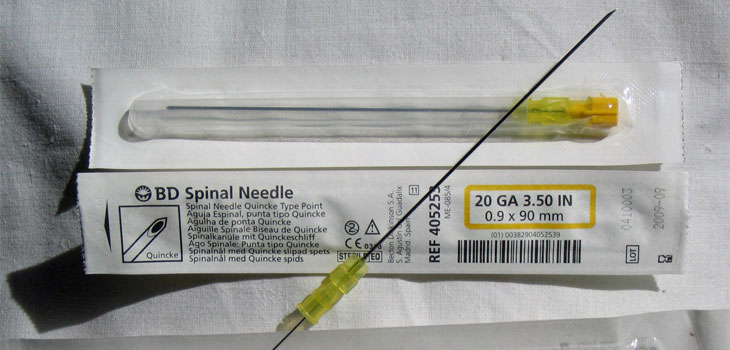
Surgeons have successfully used spinal anesthesia for total hip replacements since the 1940s, according to Javad Parvizi, M.D., FRCS and Mohammad R. Rasouli, M.D., writing in the journal Annals of Translational Medicine.
Javad Parvizi is vice chairman of research and professor of orthopaedics at The Rothman Institute of Orthopedics, Thomas Jefferson University, in Philadelphia. Mohammad R. Rasouli is Anesthesiology Resident at Thomas Jefferson University Hospital.
The two clinician researchers noted in their study that this type of anesthesia continues to grow more popular among anesthesiologists and surgeons. The reason for its popularity, they suggested, is a result of the growing body of evidence supporting better total hip replacement (THR) and total knee replacement (TKR) outcomes when neuraxial anesthesia is used.
Despite the favorable results reported for spinal anesthesia, a recent study reviewing 382, 236 joint arthroplasty procedures revealed that general anesthesia remained by far the most frequent type of anesthesia used for joint arthroplasty. Approximately 75% of the procedures had been performed under general anesthesia.
The authors wrote that, “the use of neuraxial anesthesia for total joint arthroplasty is still limited to high volume specialized centers and less frequently used in other centers.” They suggest that the reasons for the lack of universal adoption of regional anesthesia may be patient’s fears of spinal anesthesia, the lack of adequate experience on the part of the surgeons, the lack of familiarity with the regional anesthesia techniques, or the administration of perioperative anticoagulation to patients that prevents the use of regional anesthesia.
